Too Much Manual Work
Repetitive data entry, follow-ups, approvals and reporting can consume valuable team time.
Stop adjusting your business to generic software. ForceNexa develops custom software solutions around your actual processes, workflows, teams and business goals.
From CRM and ERP systems to workflow automation, business applications, dashboards, SaaS platforms and API integrations, we build practical software that helps businesses manage operations, reduce repetitive work and make better decisions.
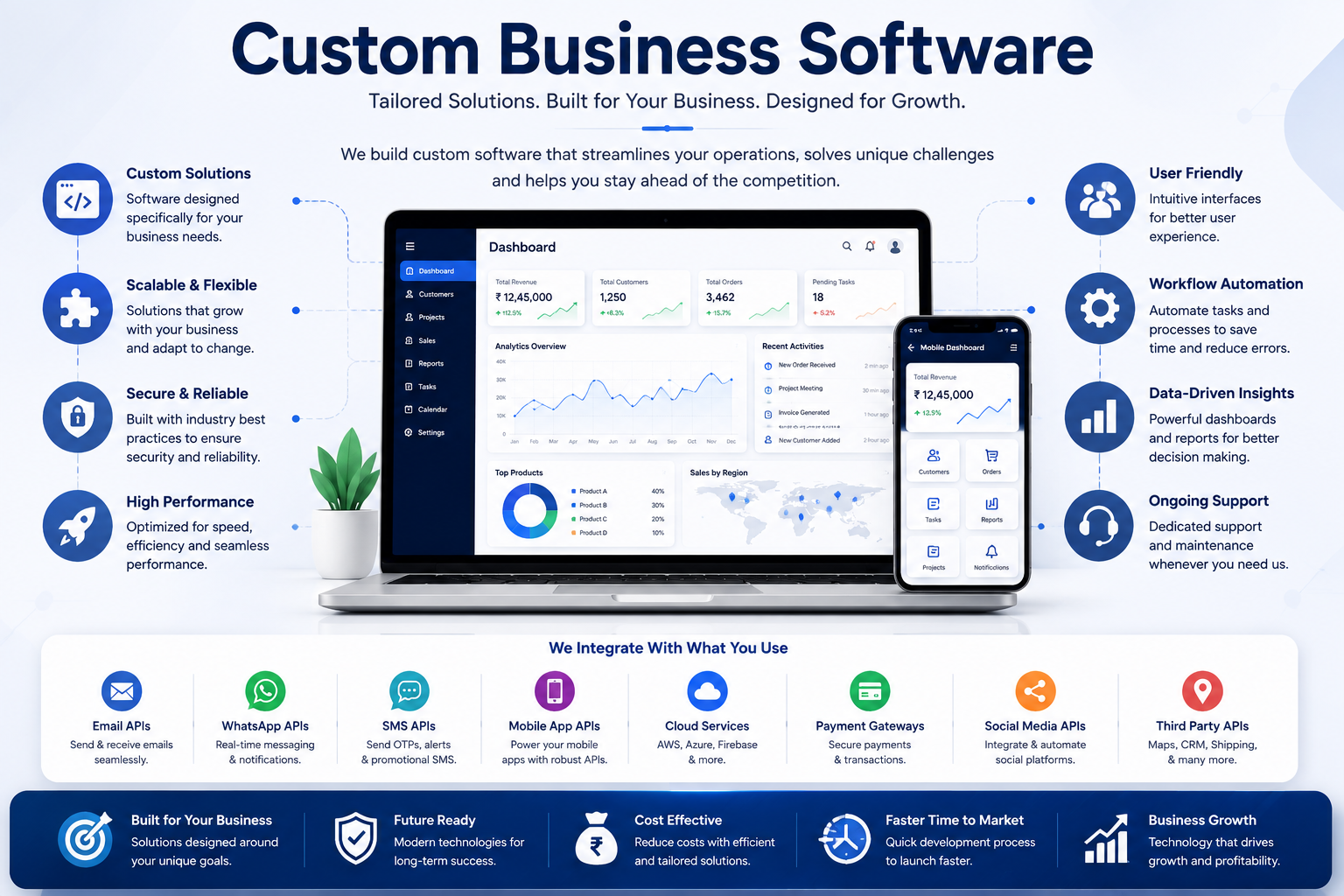
Software designed around your process.
Keep important business information connected.
Reduce repetitive manual activities.
Build today with tomorrow's growth in mind.
Many businesses start with spreadsheets, disconnected tools and ready-made applications. As operations grow, those tools can become difficult to manage. Custom software can bring your workflows, data and teams into one practical system.
Repetitive data entry, follow-ups, approvals and reporting can consume valuable team time.
Information spread across spreadsheets, emails and different tools makes daily operations harder to control.
Manual handovers and disconnected workflows can create unnecessary delays between teams and departments.
Without centralized reports and dashboards, it becomes harder to understand what is happening across operations.
We don't start by forcing your business into a predefined software package. We first understand how your business works and then plan the right technology, workflow and features around it.
We understand your business model, users, current workflow, challenges and software requirements.
We structure the application, modules, user roles, screens, workflows and data requirements.
Our team develops the required functionality with focus on usability, security and maintainability.
After launch, the software can evolve as your business requirements and processes change.
Custom software can be designed for a specific department, complete business operation or a connected digital ecosystem. The right solution depends on your processes and goals.
Manage leads, customers, follow-ups, sales activities, communication and customer information in one system.
Connect important business functions and create a centralized system for managing operations and data.
Convert repetitive manual processes into structured digital workflows that are easier to manage.
Develop internal applications for employee records, attendance, tasks, workflows and HR operations.
Create software for inventory, products, vendors, orders, operations and internal business processes.
Build browser-based software products and SaaS platforms designed for your users, business model and requirements.
Connect your custom software with third-party systems, APIs and external business services.
Turn operational data into useful dashboards and reports that help teams monitor business activities.
Your software should not only look good. It should make everyday work easier, keep information organized and give your team the tools they actually need.
Create user roles and access levels according to responsibilities within your organization.
Give managers and teams useful visibility through structured reports, dashboards and filters.
Automate repetitive steps, approvals, notifications and other business activities.
Connect your application with APIs and external systems required by your business.
Design interfaces that work across desktops, tablets and mobile devices where required.
Build alerts and notifications around important tasks, activities and workflow events.
Help users quickly find the information they need across large business datasets.
Structure applications so additional modules and business requirements can be added over time.
Every project can follow a structured development approach so that business requirements, technology and user experience stay aligned throughout the project.
Understand the business need.
Plan modules and technology.
Design practical user experiences.
Build and integrate the solution.
Validate functionality and workflows.
Deploy and continue improving.
Custom software is useful when a business has unique processes, multiple teams, specific reporting needs or workflows that standard applications cannot handle well.
We can help businesses plan and develop software around operational requirements rather than forcing those requirements into a generic workflow.
Discuss Your Business Process →
Good software starts with understanding the business. Our approach focuses on the actual workflow behind the application so the final solution is useful for the people who will use it every day.
We focus on your process, users and business objectives before defining the solution.
Build workflows around the way your team actually operates.
Connect your application with required APIs, systems and business services.
Structure user access and application functionality according to business roles.
Create practical interfaces for modern desktop, tablet and mobile usage.
Software can be maintained and enhanced as your business requirements evolve.
The technology stack should support the application's functionality, performance, security, integration and future maintenance requirements.
A structured development process helps keep the project aligned with business requirements while allowing the software to evolve as requirements become clearer.
Understand your business, users, challenges and software objectives.
Define modules, workflows, roles, integrations and technical requirements.
Plan screens and interfaces with focus on usability and business workflow.
Build the application modules and required integrations.
Validate features, workflows, user access and application behaviour.
Deploy the application and continue with maintenance, improvements and enhancements.
Share your current workflow, business challenge or software idea with our team.
Some common questions businesses ask before starting a custom software development project.
Custom software development means creating an application specifically around a business's processes, users, workflows and requirements rather than relying only on a generic software product.
Ready-made software can work well for standard requirements. Custom software can be more suitable when a business has unique workflows, specific integrations, specialized reports or processes that generic software cannot handle effectively.
Yes. Custom CRM and ERP applications can be designed around your business processes, departments, user roles, reporting requirements and operational workflows.
Yes. Custom applications can automate repetitive tasks, approvals, notifications, data processing, reporting and other structured business workflows.
Yes. Depending on the requirements, custom software can integrate with APIs, external applications, business systems and other digital services.
Custom software can be useful for small and medium businesses when their workflows or operational requirements are not being handled efficiently by spreadsheets or generic applications.
There is no single fixed price for custom software. Cost depends on the number of modules, users, workflows, integrations, reports, technology, security requirements and overall project scope. The requirement should be evaluated before providing a suitable estimate.
Development time depends on the size and complexity of the application. Modules, integrations, workflows, testing requirements and project scope all affect the development schedule.
Yes. Software can require ongoing maintenance, improvements, bug fixes, security updates, integrations and new features as business requirements change.
Depending on the existing system and available data, migration or integration can be planned as part of the software development project.
Whether you need a CRM, ERP, automation platform, business application, SaaS product or a custom internal system, let's discuss what you need.